


/file/publisher-c1a3f893382d2b2f8a9aa22a654d9c97/2026/05/36c75c0266f3a2922a85214a90c732d7.jpg)

Govt sends LOD to Norwegian defence firm, seeks over RM1b in losses
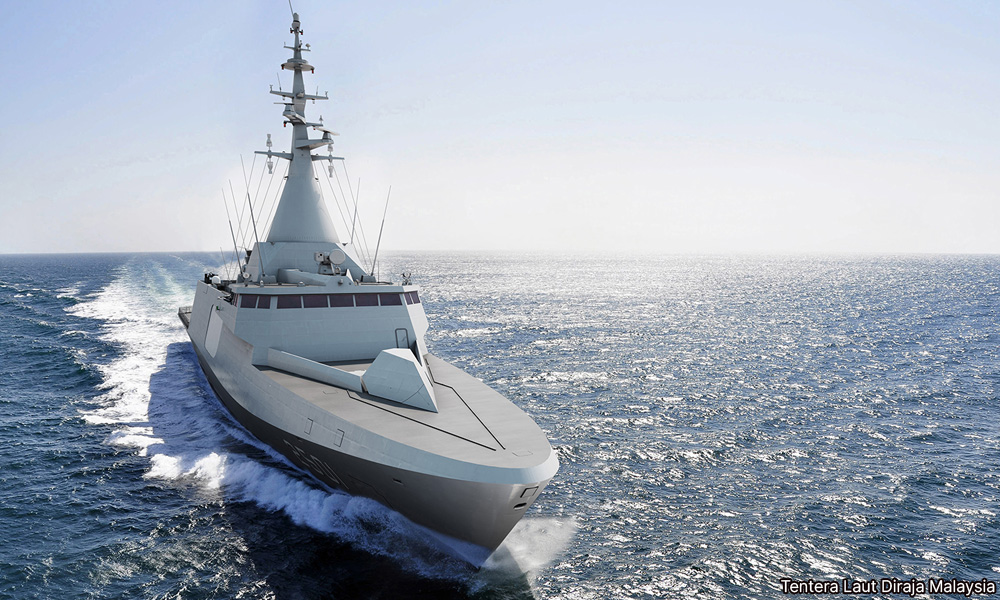
Putrajaya has issued a letter of demand to a Norwegian defence firm following the cancellation of export licences for naval strike missiles intended for the littoral combat ships (LCS), claiming losses exceeding RM1 billion.
Noting that the government is seeking direct and indirect costs following Norway’s “unilateral decision” to revoke the licence, Defence Minister Khaled Nordin said Malaysia had already paid €126 million (RM583 million) prior to the cancellation.
Putrajaya has issued a letter of demand to a Norwegian defence firm following the cancellation of export licences for naval strike missiles intended for the littoral combat ships (LCS), claiming losses exceeding RM1 billion.
Noting that the government is seeking direct and indirect costs following Norway’s “unilateral decision” to revoke the licence, Defence Minister Khaled Nordin said Malaysia had already paid €126 million (RM583 million) prior to the cancellation.
The amount, he noted, is equivalent to 95 percent of the contract’s value.
The New Straits Times today quoted the minister as confirming that the legal notice was sent to Kongsberg Defence & Aerospace AS (KDA) yesterday.
Speaking to reporters after visiting the LCS project at the Royal Malaysian Navy’s shipyard in Lumut, Perak, Khaled reportedly said the indirect costs sought by Putrajaya involve dismantling missile mounting systems already installed on the LCS vessels.
Besides training costs, replacement missile systems from other suppliers will also have to be integrated with the ships’ combat system, Khaled said.
“All this is necessary because otherwise, the guided missile system cannot function effectively. It may be designed to operate beyond 200km, but without proper integration, its range could be significantly reduced.
“It may also fail to accurately hit targets due to poor integration. Therefore, integration between the missile system and the combat system, radar, and other onboard systems is extremely important,” he explained.
Breach of diplomatic trust
Khaled also described Norway’s move as a serious breach of trust, which has raised questions about the reliability of their international commitments.
He pointed out that international relations hinge upon confidence in nations honouring agreements, contracts, and commitments, especially in the context of defence diplomacy.
The minister also expressed concern that the Scandinavian nation’s actions could be “emulated or repeated”, particularly during procurement engagements with Western or Nato countries.

Emphasising that the predicament Malaysia finds itself in now is “not merely a defence procurement issue”, Khaled said the matter reflects a larger problem on the “erosion of trust in international relations”.
“... trust and confidence between countries are diminishing - that is the real impact of Norway’s actions against us in this matter.
“Imagine if Malaysia breached a commitment like this - I believe the whole world would condemn us, but when Norway does it, no one says anything,” he added.
Liability may still apply
On May 6, defence news portal Malaysian Defence reported that Khaled was informed of the export licence ban during a meeting with Norwegian officials on April 20, on the first day of the Defence Services Asia 2026 exhibition, ahead of NSM deliveries scheduled this month.
The Norwegian Foreign Affairs Ministry later told Malaysiakini that the move, which it said was due to the changing security landscape in Europe and globally, would see Oslo limiting sensitive defence technology exports to its closest allies.
Norway’s decision also led to Prime Minister Anwar Ibrahim “expressing his vehement objection” to his Norwegian counterpart, Jonas Gahr Store, in a telephone call on May 14.

Several lawyers have since opined that Norway’s ban might not automatically absolve KDA of liability for failing to fulfil its supply contract for the NSM.
Each of the local navy’s five Maharaja Lela-class LCS is meant to be armed with eight NSMs, with the anti-surface missiles primarily used to attack naval targets from hundreds of kilometres away, but can also be used against ground targets.
READ MORE: DAP MP presses PSSC to summon minister on Norway missile export ban
Following the export ban, however, KDA will have to cancel the missile supply contract signed with Malaysia, as it will not be able to legally deliver the armament.
On May 9, Bernama reported that, according to KDA’s website, the contract was formalised between the Malaysian navy and the company in April 2018.
/file/publisher-c1a3f893382d2b2f8a9aa22a654d9c97/2026/05/f24697122a11f9387d4addc8d01f34ab.jpg)
/file/publisher-c1a3f893382d2b2f8a9aa22a654d9c97/2026/05/c419b776683d229a625da6893e240173.jpg)
/file/publisher-c1a3f893382d2b2f8a9aa22a654d9c97/2026/05/0a09bbae358519cf1afb8501a79e5843.jpg)
/file/publisher-c1a3f893382d2b2f8a9aa22a654d9c97/2026/05/69d0e545cf3f45348e151a862c604ad8.jpg)
/file/publisher-c1a3f893382d2b2f8a9aa22a654d9c97/2026/01/22d23864403c3d7c33ae401846f43fb6.jpg)


Are you sure you want to delete this comment?
This action cannot be undone.